





Login to Internet banking
A brand-new experience smarter, faster and secured


Invest in a sustainable future with IDFC FIRST Bank’s Green Fixed Deposit
Book FD Now
Invest in a sustainable future with IDFC FIRST Bank’s Green Fixed Deposit
Book FD Now
Invest in a sustainable future with IDFC FIRST Bank’s Green Fixed Deposit
Book FD Now
Invest in a sustainable future with IDFC FIRST Bank’s Green Fixed Deposit
Book FD Now
Invest in a sustainable future with IDFC FIRST Bank’s Green Fixed Deposit
Book FD Now
Invest in a sustainable future with IDFC FIRST Bank’s Green Fixed Deposit
Book FD Now
Invest in a sustainable future with IDFC FIRST Bank’s Green Fixed Deposit
Book FD Now




Most Searched
Top Products
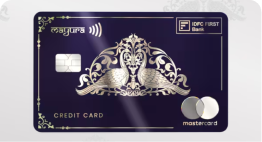
Credit Cards
Bank Accounts
Help Centre


WhatsApp banking
Say ‘Hi 👋’ on 9555 555 555 & we’ll get back to you instantly

Locate Us
Locate nearest IDFC FIRST Bank branches and ATMs

Download our app
Install now for seamless banking

Download our app
Get instant help for all your queries in one place
Unlock features, exclusively available
only on
the
IDFC FIRST Bank app.
Trusted by 1.2+ million Indians.



Tools & Calculators
Privilege Program

Unlock features, exclusively available only on the IDFC FIRST Bank app.
Download now!
Have you encountered a phishing attempt from an email sender impersonating IDFC FIRST Bank? Report all such incidents to us at reportphishing@idfcfirstbank.com

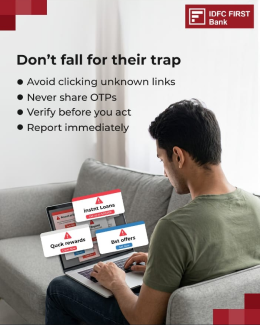
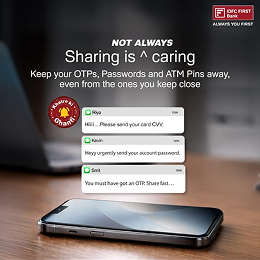
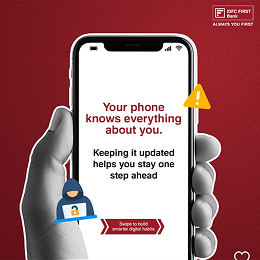
Digital payments are safe and secure when you follow a few simple rules. Let’s build responsible digital payment habits and safeguard ourselves against fraud.

From phishing links to identity theft and UPI fraud, learn the warning signs before it's too late.

Quick tips for staying safe from cyber fraud.

Cybercriminals pose as law-enforcement officials, falsely accuse you of crimes, and keep you on continuous calls to intimidate you into making payments. They often target seniors or anyone easily alarmed by authority.

Fraudsters lure you with “easy money” and trick you into transferring illegal funds through your account. Even unknowingly acting as a money mule can lead to serious legal trouble.

Scammers convince you to download malicious APK files that steal personal data and compromise your device, leading to financial loss. Never download apps from unverified links.

Impersonators send fake messages threatening immediate service disconnection for unpaid bills. Their goal is to create panic and push you into making urgent, fraudulent payments.

Cybercriminals trick you into sharing your 6-digit WhatsApp verification code to hijack your account and access sensitive information.

Scammers promote fake stock-market schemes, pre-IPO offers, and fraudulent trading apps using convincing ads and profiles to trap unsuspecting investors.

Fraudsters pose as officials from agencies like Narcotics Control or Customs, accuse you of fake crimes, and demand money or “confidential information” to avoid action.

Criminals use AI-generated audio or video to impersonate familiar people and deceive you into sending money or sharing sensitive information.

Scammers persuade you to dial *401# to redirect your incoming calls to them, allowing identity theft and fraudulent activity.

Fraudsters impersonate recruiters, conduct fake interviews, and ask for personal details or payments under the guise of verification or training fees.

You are manipulated into initiating the fraudulent transaction yourself without sharing credentials - often through urgency, fear, or trust-based tactics.

Scammers create fake groups using the bank’s name/logo and distribute malicious APK files that compromise your device and accounts.

Criminals clone voices of family or friends to create urgent situations, asking you to transfer money immediately.

Scammers send fake penalty messages with malicious links or APK files that mimic official portals to steal money or personal data.

Fraudsters pretend to be officials or representatives from trusted organisations to extract money or confidential information from you.

Cybercriminals offer “easy money” for liking or subscribing to online posts across platforms, later trapping you in payment demands or data theft.

Scammers use fake QR codes that redirect you to fraudulent sites to steal banking details or personal information.

Fraudsters run misleading ads using fake logos and enticing offers to trick you into paying upfront for non-existent products or services.

Fraudsters use highly sophisticated AI and create videos to dupe you into authorising payments or sharing sensitive personal details.

Fraudsters send emails or messages that look completely genuine to trick you into clicking malicious links, downloading harmful attachments, or sharing personal information.

Cybercriminals hide malware inside email attachments, fake websites, or pop-up offers. Once you click, the malware locks your device and demands a ransom for access.

Scammers use persuasive calls, SMS alerts, pretexts, or impersonation to manipulate you into revealing sensitive details or taking actions that compromise your security.

Criminals deceive you into making unintended payments or sharing financial information that allows them to access your account and steal your money.

Fraudsters pose as online friends, familiar contacts, or trusted pages to gain your confidence and extract money or personal information.

Criminals install skimmers, dummy keypads, or hidden cameras on ATMs to steal your card details and PIN, enabling them to clone your card and withdraw money.

Scammers create fake websites or display fraudulent contact numbers online that look identical to official bank pages, tricking you into sharing confidential data.

Fraudsters alter details on stolen cheques or misuse personal documents to impersonate you, open accounts, apply for loans, or access funds without your knowledge.